
HASUNOMA HOLDINGS
Tatami, Japanese culture, for spaces around the world.
Climate, craftsmanship and time are woven into every mat. Scroll to discover how it is made and why it endures.
Structure
Three layers that breathe.
A tatami has three layers: the omote (woven surface), the toko (core) and the heri (border). The weave meets the skin, the core supports, and the border defines the design.
- Omote (surface)The woven igusa layer. The surface that touches the skin and releases its scent.
- Toko (core)The core material, giving resilience, insulation and humidity control.
- Heri (border)Fabric that trims and reinforces the long edges. The heart of the design.
The Virtues of Igusa
A floor that tunes the air.
Igusa is a living natural material. It is said to soften humidity, freshen the air, and ease the mind with its scent.
- HumidityAbsorbs moisture and releases it as it dries, said to temper indoor humidity.
- Fresh airIts sponge-like structure is said to adsorb airborne substances.
- ScentThe aromatic compounds of igusa are said to bring calm and relaxation.
- Insulation & cushionThe air held within is believed to ease the chill and soften every step.
Types of Weave
The weave sets the expression.
How the igusa is woven changes the look of the grain and its durability. Three classic weaves.
- HikimeHikimeThe most common weave. A soft grain that settles naturally into a home.
- MekumiMekumiA fine grain with a refined look, used for borderless and Ryukyu-style tatami.
- MoromeMoromeA broad grain with presence. Highly durable, suited to spaces with heavy foot traffic.
Color & Aging
From green to amber.
The fresh green of new tatami turns, with sun and time, into a lustrous amber. That very transformation is cherished as part of its Japanese value.
How It Is Made
Five steps, one mat.
From field to room, tatami is born through the hands of artisans.
- 01CultivationIgusa is grown in paddies. Fine tatami begins with fine igusa.
- 02HarvestCut in summer while the morning dew remains. Each stalk becomes a thread of the surface.
- 03Mud dyeingDyed in natural mud, then dried, to fix color, scent and sheen.
- 04WeavingIgusa is woven into the warp to form the omote.
- 05EdgingThe surface is fitted to the core and the border stitched on, completing the mat.
Types of Heri
The border frames the space.
The heri is the heart of the design. From plain to patterned, choose to suit the character of the room.
- Plain (sumi)Quiet and refined. A classic that suits both modern and Japanese interiors.
- IndigoDeep indigo lends a composed, crisp expression.
- Patterned (mon-beri)A fine gold-toned pattern. For formal spaces and the tokonoma.
Benefits
Five reasons to choose tatami.
Beauty is only part of it. Tatami raises the quality of a space.
- HumiditySoftens humidity for a floor that feels comfortable through every season.
- SoundAbsorbs impact and footsteps, keeping the room quiet.
- SafetyA resilient floor helps cushion the impact of a fall.
- ScentThe fragrance of igusa brings a sense of calm to the room.
- Japanese valueA single tatami room lends a space story and dignity.
Works
Tatami, in your space.
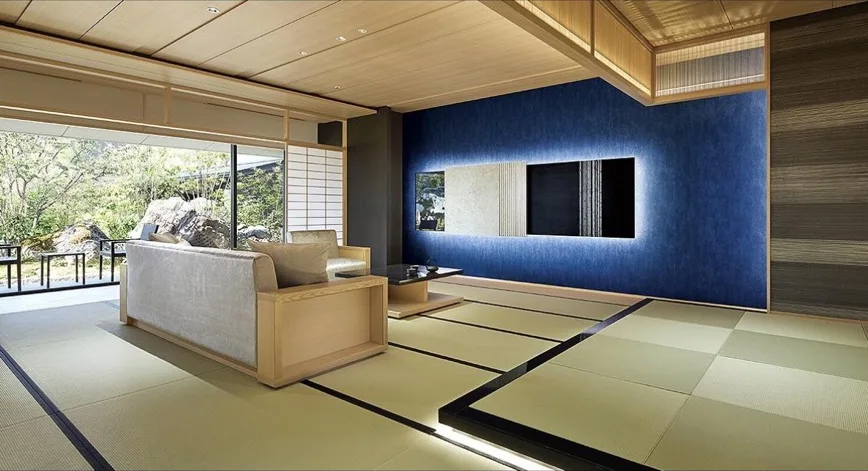
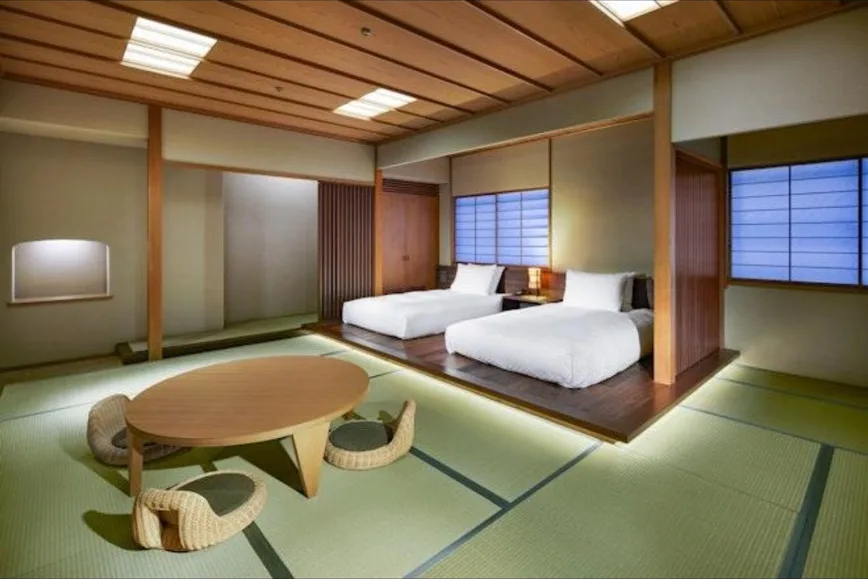
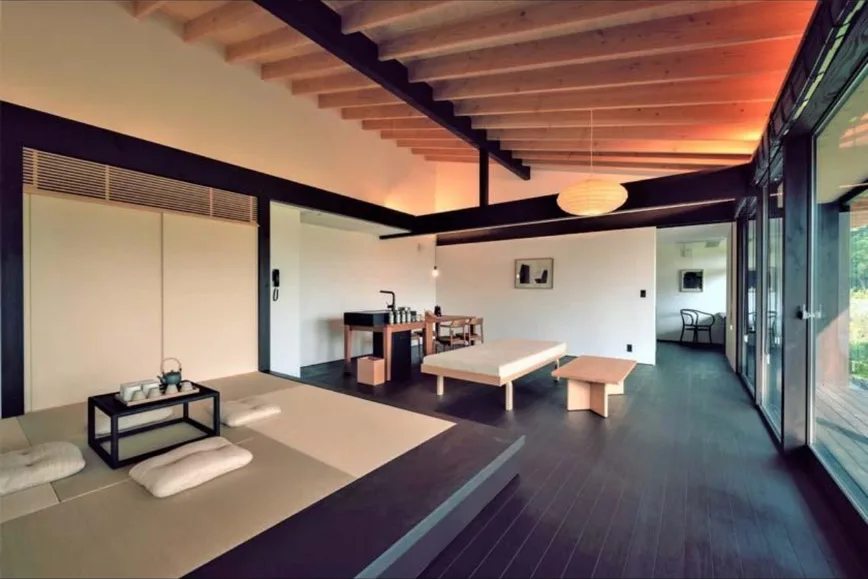
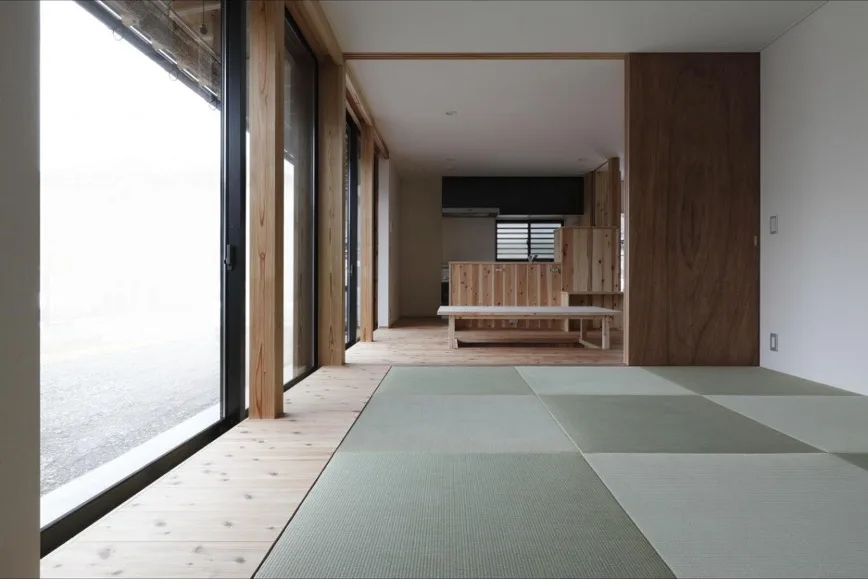
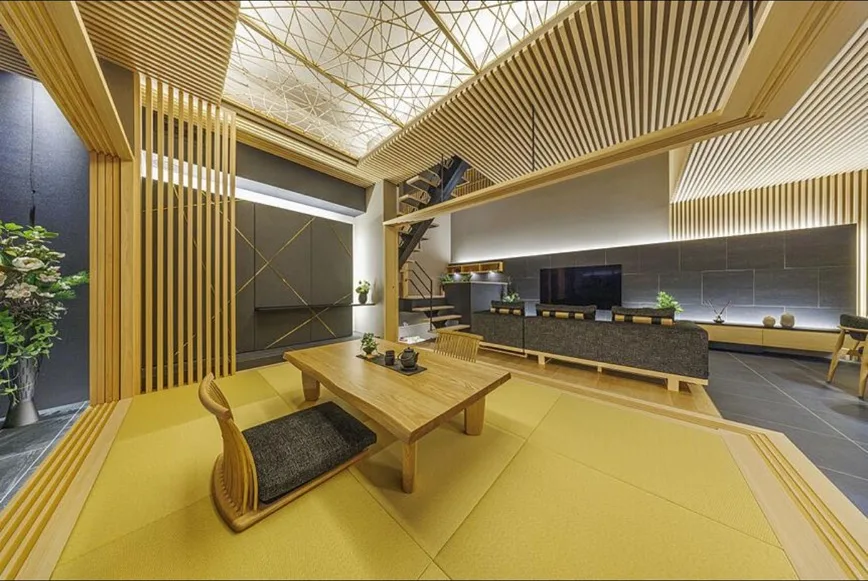
For hotels, ryokan, homes and commercial spaces. Japanese settings, brought into contemporary rooms. *Images are illustrative.
ORDER YOUR TATAMI
Choose the spec. Order your tatami.
Pick the facing, border and layout — the finish and estimate update instantly. You can send your order right from your phone.
One mat, for your space.
Choose the surface, border, layout and size, and compose it on the spot. Describe it in words and AI proposes three options.