
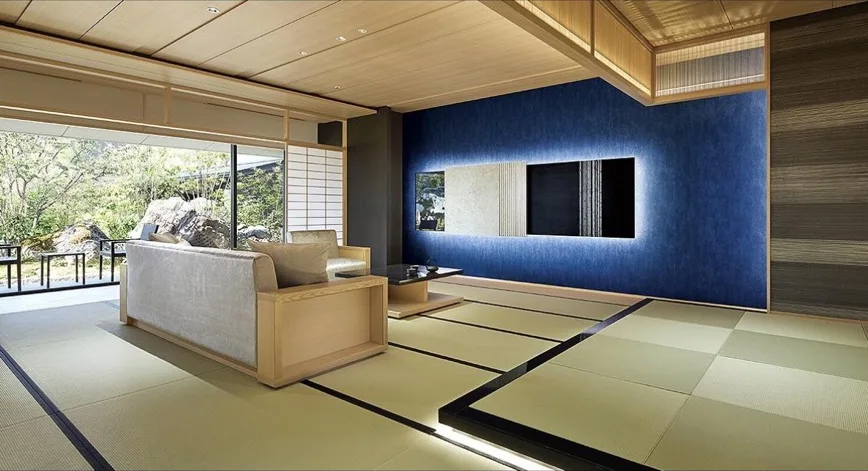
The appeal of oki-datami and unit tatami panels is that they let you place them directly on your existing floor — no construction required — and immediately gain both the physical comfort and the Japanese-modern aesthetic of tatami. They work in rental apartments, adapt to any layout, store easily, and can be added to your current home without a single change to the structure. Here is how to choose the right ones and how to use them well.
What Oki-Datami Are
Thin tatami panels designed to rest on top of an existing floor. The dominant format is a half-size square panel (roughly 45 × 45 cm or similar) — no tools, no fixing, no construction needed. Use as many or as few as you like, cover a corner or an entire room, and stand them upright for storage when they are not in use.
Ways to Use Them
- Lay a cluster in a corner of the living room and create an instant lounging nook — a low-rise platform feel without any carpentry.
- Cover the bedroom floor and sleep on a traditional futon arrangement.
- Spread them in a child’s room for a safe, soft play surface (tatami for children and seniors).
- Place them under your desk while working from home for a warmer, cushioned feel underfoot.
Three Techniques for a Japanese-Modern Finish
- Lay borderless panels in a checkerboard pattern: Square heri-nashi (borderless) panels placed with alternating grain directions catch light differently and produce a subtle, elegant checkerboard effect — the hallmark of contemporary Japanese-modern interiors.
- Choose restrained colors: Muted greys, warm beiges, and soft natural greens blend naturally with modern furniture and avoid the “traditional tatami room” association.
- Subtract rather than add: Keep furniture low and simple, and let the tatami surface do the visual work. More empty tatami is more refined, not less.
Borderless square tatami is often marketed under the name “ryukyu tatami” and has become the defining element of Japanese-modern interiors. The face material can be igusa, washi, or resin — choose based on how much care you want to invest and how you want the room to feel (see the material guide).
Safe for Rental Properties
Because the panels are not fixed to the floor in any way, there is nothing to repair on moving out. You can rearrange them freely, and they come with you to your next home.
Choosing the Right Panels
- Area: Count how many panels you need for the zone you want to cover. Starting with a single corner is a low-commitment, high-impact first step.
- Thickness: Thicker panels feel more cushioned underfoot; thinner panels minimize the step height from adjacent flooring.
- Material: Igusa for authentic scent and humidity regulation; washi or resin for easier care.
For the full case for tatami in everyday living, see the benefits of a tatami room at home.
Frequently asked questions
- What is the difference between oki-datami and unit tatami panels?
- The two terms are used interchangeably. Both refer to thin, freestanding tatami panels that sit directly on top of existing flooring with no installation required. The most common format is half-size square panels that you arrange side by side to cover as much floor as you like.
- Can oki-datami be used in a rental apartment?
- Yes. Because the panels simply rest on the floor with no fastening or construction, they are completely safe for rental properties where you are required to restore the original condition on moving out. When not in use, they can be stood on their side for easy storage, and they travel with you when you move.
- What is the trick to making it look Japanese-modern rather than traditional?
- The classic technique is to lay borderless (heri-nashi) square panels in a checkerboard orientation, alternating the direction of adjacent panels. Choose muted tones — grey, warm beige, natural green — and keep furniture low and simple, leaving plenty of the tatami surface visible.
Considering a Japanese space?
Contact us