
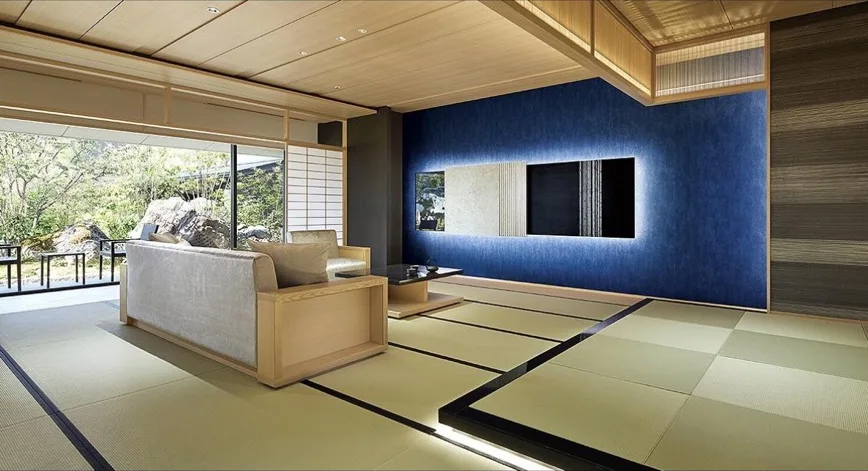
The greatest benefit of adding tatami to a room is that you gain three things at once: natural “humidity regulation” that keeps the air in balance, “floor insulation” that softens the cold rising from below, and “relaxation” delivered through the scent and texture of igusa rush. A tatami space invites you to stretch out and rest — and it quietly raises the quality of daily life. Here is a balanced look at the benefits and the drawbacks.
Benefit 1: Year-Round Comfort Through Humidity Regulation
The interior structure of igusa rush is sponge-like, absorbing moisture from the air when conditions are humid and releasing it when the air is dry. The result is a room that tends gently toward a stable humidity throughout the seasons — without a humidifier or dehumidifier.
Benefit 2: Insulation That Softens the Cold Floor
Tatami’s layered air pockets make it thermally resistant. In winter it moderates the chill rising from the subfloor; in summer it stays noticeably cooler underfoot. This also reduces the load on heating and cooling systems, which is a practical bonus.
Benefit 3: Scent and Texture That Genuinely Relax
The scent of igusa has a well-recognized calming effect, and combined with the soft, responsive feel of tatami underfoot, it creates a room that invites you to let go of tension. Lying directly on the floor — something tatami makes entirely comfortable — is an experience unique to this material.
Benefit 4: A Safer Floor for Children and Older Adults
The cushioned give of tatami absorbs the impact of a tumble, making it a reassuring choice for families with crawling babies or elderly members. For more on this, see tatami for children and seniors.
Drawbacks and How to Address Them
- Fading: Natural igusa changes color with sun exposure. → Use curtains or blinds to manage direct light.
- Mold and dust mites: Moisture left to accumulate creates the conditions for both. → Prevent with regular ventilation and dry-wiping (see tatami care basics).
- Vulnerable to water: Wipe up spills immediately and dry thoroughly.
If these points are a concern, washi tatami and resin tatami are both far more resistant to fading and low-maintenance.
A Simple Way to Start
If you want the feeling of tatami without any construction work, free-standing oki-datami (unit tatami panels) placed on your existing flooring are the easiest entry point. You can bring the comfort of tatami into your current home right away.
Frequently asked questions
- What is the single greatest benefit of tatami?
- Natural humidity regulation — igusa absorbs excess moisture and releases it when the air is dry — combined with a comfortably soft surface, effective floor insulation, and the relaxing scent of fresh rush grass. Together they create a living space where you can lie down and truly unwind.
- Are there drawbacks to tatami?
- Natural igusa can discolor with sun exposure, and if moisture is allowed to accumulate, mold and dust mites can develop. Both risks are well managed with regular ventilation and dry-wiping. Washi or resin tatami are even easier to maintain if these concerns are a priority.
- Does tatami really provide floor insulation?
- It does. Tatami contains many air pockets, which makes it a poor conductor of heat. This moderates the chill from the floor in winter and keeps the surface feeling refreshingly cool in summer — noticeably less cold underfoot than hardwood or laminate flooring.
Considering a Japanese space?
Contact us