
FAQ
Frequently asked questions
FAQ
Answer-first responses to the questions we hear most about tatami, Japanese spaces, and exporting tatami overseas.
- What are the benefits of tatami?
- Tatami made from igusa rush regulates humidity by absorbing and releasing moisture, helps purify indoor air, cushions falls with gentle elasticity, insulates against cold floors, and releases a calming natural scent. It also creates a quiet, distinctly Japanese atmosphere.
- What is tatami, exactly?
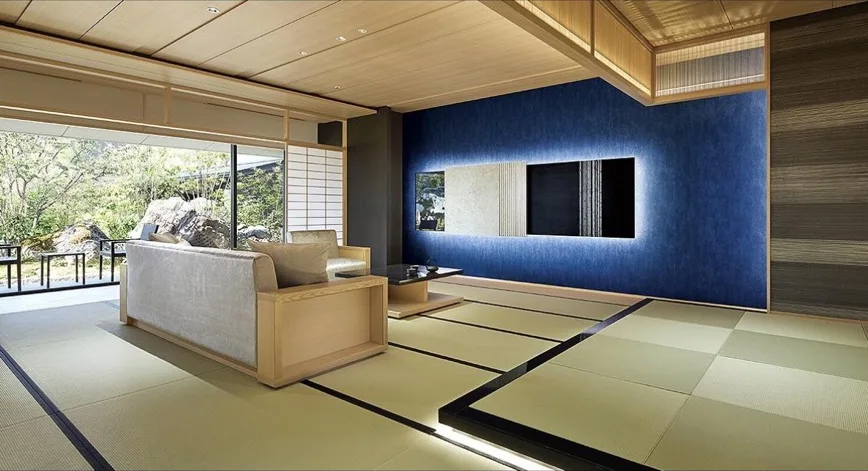
- Tatami is a traditional Japanese flooring mat with a firm core (tatami-doko) wrapped in a woven surface of igusa rush (tatami-omote) and bordered with cloth. A room floored with tatami is called a washitsu, or Japanese-style room.
- Does tatami provide insulation?
- Yes. Tatami holds many pockets of air inside its core, so it conducts heat poorly and reduces cold rising from the floor, improving heating and cooling efficiency. It feels noticeably warmer underfoot than bare flooring.
- How often should tatami be replaced?
- As a guide, tatami mats are turned over (uragaeshi) after 3–5 years, re-surfaced (omotegae) after 4–7 years, and fully replaced after 10–20 years. Heavy use, in a hotel for example, shortens these intervals.
- What is okidatami (unit tatami)?
- Okidatami are thin tatami panels you simply place on top of existing flooring — no construction needed. They can be laid down or removed freely, making them ideal for rentals and modern rooms that want a Japanese touch.
- Why add tatami rooms to a hotel or ryokan?
- Tatami guest rooms give travellers — especially international visitors — a clear sense of authentic Japan. This differentiates rooms, supports higher rates, and tends to lift guest satisfaction and review scores.
- Can tatami be exported to hotels and homes overseas?
- Yes. FJD IMPEX, part of the HASUNOMA group, exports Japanese igusa and washi tatami to hotels, ryokan and residences abroad, and advises on local sizing, standards and installation.