
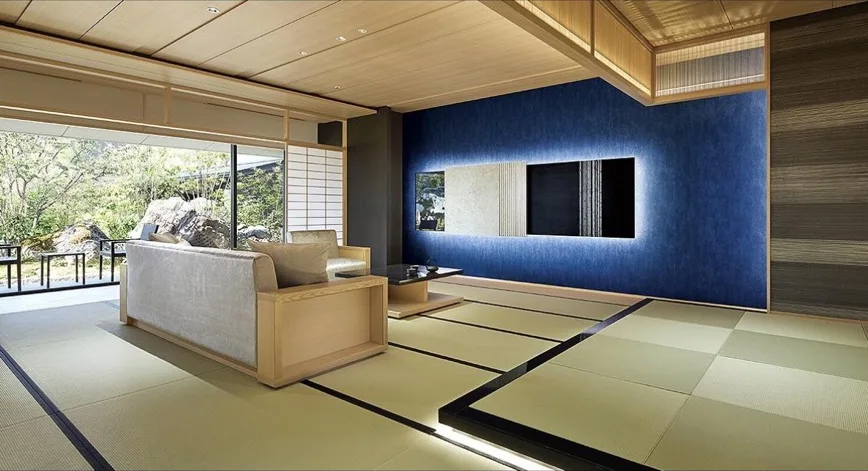
The reason tatami tends to be kind to households with young children or older adults is straightforward: its natural cushioning can help soften the impact of a fall, the floor stays warmer rather than cold, and it is entirely comfortable to lie down on. Safety, warmth, and comfort are built into the material itself, making tatami a floor that can support the whole family. Here is a closer look.
Safety: Absorbing the Impact of Falls
Tatami is structured with internal air pockets that give it a gentle spring. When a crawling baby loses balance, when a toddler takes a tumble during first steps, or when an older adult stumbles, the tatami surface can absorb a meaningful portion of the impact that a hard floor would transfer directly to the body. That said, tatami does not fully prevent falls or injuries, and effects vary by individual. For elderly family members who sit and stand frequently, this cushioning may also help reduce the cumulative fatigue and joint stress that hard flooring creates.
Warmth: A Floor That Does Not Get Cold
Because tatami conducts heat poorly, the floor stays noticeably warmer underfoot than hardwood or tile, even in winter. Infants and babies, who have limited ability to regulate their own body temperature, can benefit from not being placed directly onto a cold surface. Older adults, who often feel cold more acutely, find it more comfortable for both floor-level activities and sleeping. (See how tatami insulation works for the explanation.)
Comfort: A Floor You Can Rest On
Tatami is soft and supportive enough to lie directly on — for napping, for diaper changes, for stretching, for quiet time. A futon laid on tatami becomes a complete sleeping arrangement, with no risk of falling from a raised bed frame.
Keeping It Hygienic
The principle is simple: do not let moisture accumulate.
- Ventilate regularly: Open windows or run a fan frequently to remove excess humidity from the room.
- Dry-wipe along the weave: Use a dry cloth or mop, going with the grain, to pick up dust before it settles in.
- Damp-wiping for stains — wring thoroughly: Use a well-wrung cloth for visible soiling, and dry completely afterward.
For full care instructions, see tatami care basics. If you want to minimize maintenance further, washi and resin tatami are significantly more resistant to dust mites, mold, and moisture (see the material guide).
An Easy Way to Start
If you want to add a tatami surface without any construction, freestanding oki-datami (unit tatami panels) placed directly on your existing floor are the simplest starting point. A few panels in a child’s room or a corner of the living room is all it takes to introduce a gentler floor into daily life.
Frequently asked questions
- Is tatami a good choice for a home with young children?
- Yes. Tatami's natural cushioning softens the impact of falls and tumbles during crawling and early walking, and stays warmer than hard flooring so babies can lie or sit directly on it without getting cold. It is a reassuring surface at every stage of early childhood.
- Why would you recommend tatami for a home with an elderly resident?
- Tatami has a giving quality that can help reduce the risk of injury in a fall — a meaningful practical benefit for older adults, though it does not fully prevent falls or injuries. The surface is soft and warm underfoot, which tends to make standing up and sitting down more comfortable, and may reduce cold-floor discomfort during sleep.
- Is tatami hygienic enough for young children?
- Yes, with the right habits. The key is preventing moisture accumulation — the single biggest driver of mold and dust mites. Regular ventilation, dry-wiping along the weave, and prompt drying after any spill are the core practices. Washi or resin tatami can be a good choice if you want even lower maintenance.
Considering a Japanese space?
Contact us